


You’ve probably heard the term “SEO” tossed around here and there — Maybe it was the title in some spammy email, or you saw it on a competitor’s website, or a coworker mentioned it in passing, you nodded along, but still don’t really know what it means, how to do it or if it’s even worth the money.
We get it. It’s a term that gets thrown around a lot and explained rarely. So let’s actually explain it.
Local SEO, in Plain English
SEO stands for “search engine optimization,” which is already a mouthful for a simple idea: making sure Google actually shows your business to people who are looking for what you do.
“Local” is the part that matters most for you. When someone in Kaimukī types “plumber near me” or “best mechanic Honolulu” into their phone, Google isn’t searching the whole internet, it’s searching for businesses near that person, right now. Local SEO is the practice of making sure your business is the one that shows up, not your competitor three blocks over who happened to fill out their Google listing correctly and you didn’t.
That’s really it. It’s not a trick. It’s making sure the internet’s biggest directory has accurate, complete, discoverable information about your business, and that your website itself gives Google reasons to trust and rank it.
What “Near Me” Search Actually Looks Like
Here’s a number worth sitting with: a huge share of local searches on mobile lead to a visit within a day. Someone isn’t idly browsing when they search “electrician Honolulu,” they’re actively trying to solve a problem, usually today. If you’re not visible in that moment, you’re not losing a future customer, you’re losing one who was ready to call right now.
That’s the whole game with local SEO: showing up in the moment someone’s already decided they need you.
The Handful of Things That Actually Move the Needle
You don’t need to become an SEO expert. You need a handful of things done right:
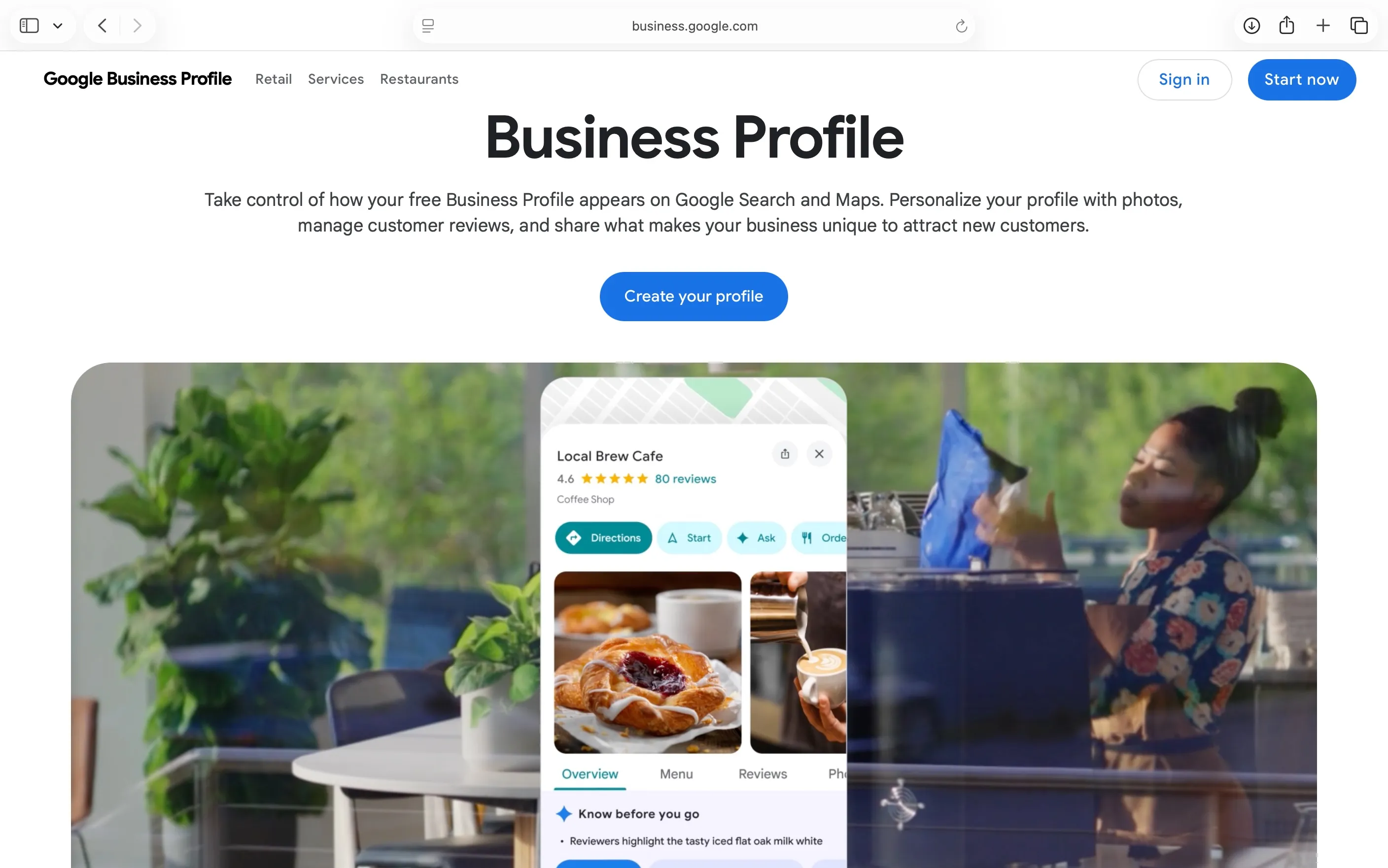
A complete, accurate Google Business Profile. This is the single highest-leverage thing most small businesses get wrong. Wrong hours, no photos, an address that doesn’t quite match your website, these all quietly tell Google “don’t trust this listing,” and it shows up less.
Real content on your website that says what you actually do, for whom, and where. Not just a homepage that says “Quality Service You Can Trust.” Google (and your customers) need to see the actual words: your service, your neighborhood, your island. Vague copy ranks vaguely.
Reviews, and more importantly, responding to them. Google factors review volume and recency into local ranking. Asking happy customers for a quick review, and actually replying to it, does more for local ranking than most paid tactics.
A site that loads fast and works on a phone. Most “near me” searches happen on mobile, in the moment. A slow, clunky mobile site loses people, and search engines, before they ever read your pitch.
Consistency across the web. Your business name, address, and phone number should match, word for word, wherever they appear, your website, your Google listing, Yelp, Facebook. Small mismatches confuse the ranking systems more than you’d think.
None of this requires a marketing degree. It requires someone actually doing it, correctly, and keeping it current.
What If You Don’t Have a Storefront?
Good question, and one we hear a lot from electricians, plumbers, contractors, and other solo operators who work out of a truck, not a shop. If that’s you, you’re probably wondering: do I really have to put my home address on the internet for this to work?
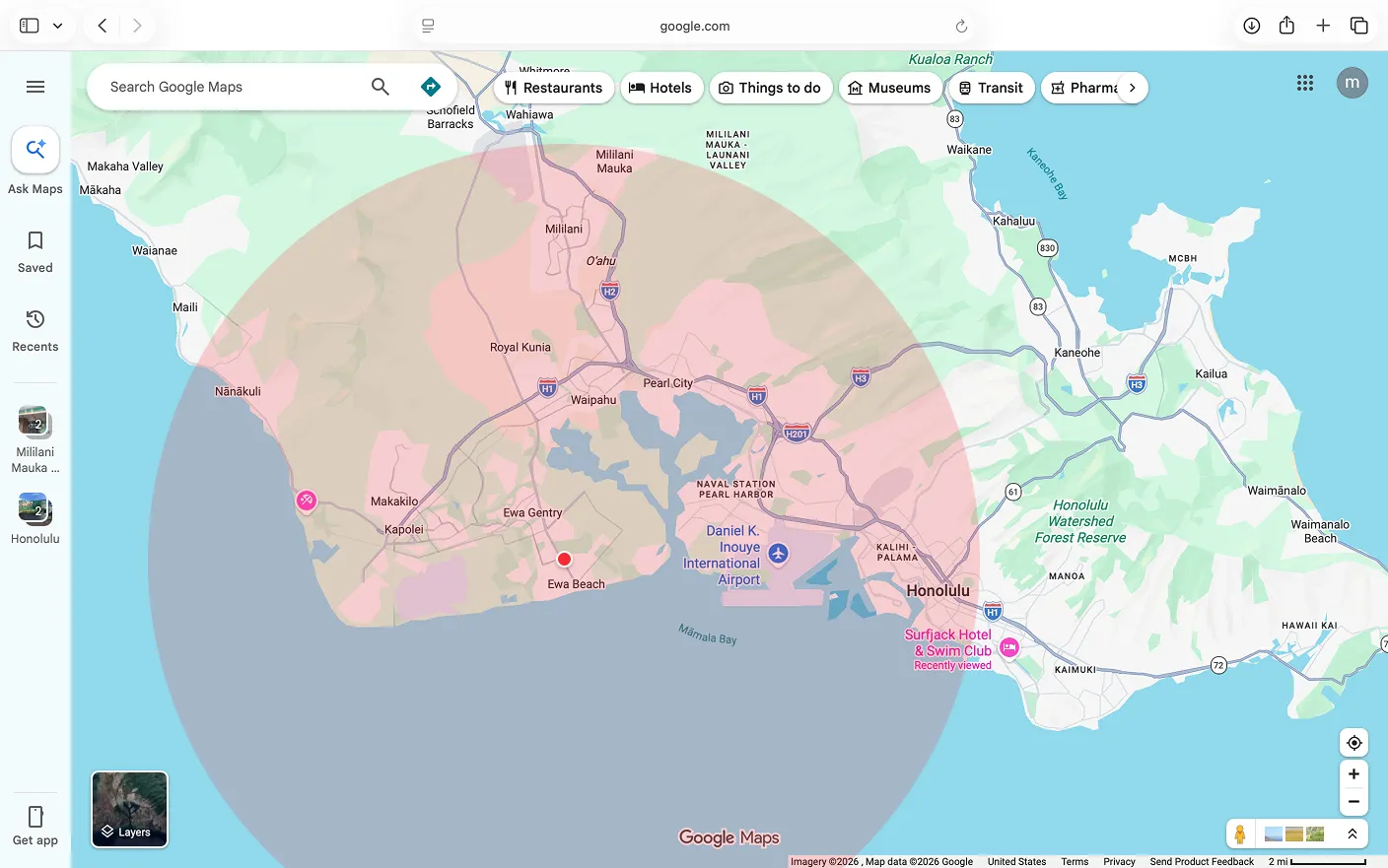
You don’t. Google has a specific setup for exactly this situation, called a “service-area business.” When you set your Google Business Profile up this way, you list the cities, neighborhoods, or zip codes you actually serve — say, Kaimukī, Kāneʻohe, and Kailua — instead of a street address, and that’s what shows up publicly. Your home address still gets entered during setup, because Google needs it to verify you’re a real business, but it’s never displayed to anyone searching for you.
A few things worth knowing if you go this route:
Be honest about your service area. It’s tempting to claim all of Oʻahu to maximize reach, but a service area that’s realistic to where you actually take jobs tends to rank better than one that’s stretched thin trying to cover everywhere.
Skip the workaround of renting a mailbox or “virtual office” just to have something to list. Google’s rules require that any address you show publicly be a real, staffed location, not a UPS Store box or an empty coworking desk you visit once a month. Getting flagged for a fake address can get your whole listing suspended, which costs you far more than the privacy problem it was trying to solve.
Everything else still applies, maybe more. Without a physical location to lean on, your reviews, your response time, and how clearly your website says what you do and where you do it carry even more weight. A well-reviewed service-area business regularly outranks a poorly-maintained storefront listing.
A Word on AI Search, Since It’s Coming Up Fast
Worth a quick, honest mention: people are increasingly asking ChatGPT and Google’s AI features things like “best hair salon in Kailua” directly, instead of typing it into a search bar. The same fundamentals apply, clear, accurate, specific information about your business, published in places these tools can find it. It’s a newer wrinkle on the same idea: be findable, be accurate, be specific. We’ll dig deeper into that one in a future post.
So, Do You Actually Need This?
If people ever find your business by searching for what you do near where you are, and for most brick-and-mortar and service businesses in Hawaii, that’s most of your customers, then yes. Not because SEO is magic. It isn’t. Nobody can promise you the #1 spot overnight, and anyone who does is just over selling the idea. But a business with an accurate, complete, well-built online presence consistently beats one without it, and that gap only grows the longer it’s ignored.
It’s not a mystery, and it’s not a magic trick. It’s a handful of things done right and kept up. If you want a plain-language look at where your business currently stands, no jargon, no pressure, get in touch and we’ll walk through it with you.